

It usually starts with nothing at all. You're driving home, sitting in a meeting, or even lying in bed half-asleep, and then, out of nowhere, your heart starts pounding, your chest tightens, and you can't quite catch your breath. If this has happened to you more than once, it's worth talking to a psychiatrist who specialises in Panic Attack Treatment in Rajkot. Getting ahead of it early makes a real difference, both in understanding what's actually going on and in getting your confidence back.
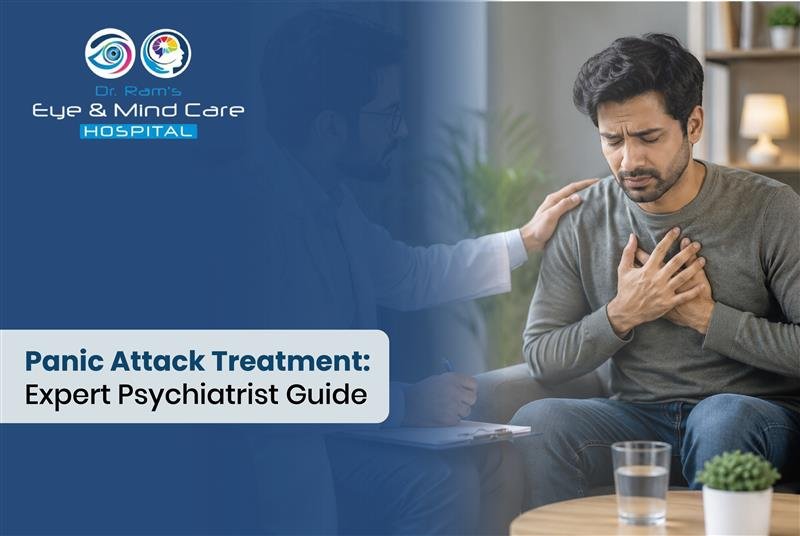
What exactly is a panic attack?
In simple terms, it's a wave of intense fear or discomfort that hits fast and peaks within a few minutes. It doesn't wait for a convenient moment; it can show up while you're shopping, working, driving, or just trying to relax on the couch. Panic attacks aren't dangerous in a medical sense, but anyone who's had one will tell you they don't feel that way in the moment. Left unaddressed, they can start shrinking your world.
What Does It Actually Feel Like?
No two people describe it exactly the same way, but a lot of the symptoms overlap:
- Heart suddenly racing
- Tightness or a dull pain across the chest
- Trouble catching your breath
- Sweating, shaking, sometimes uncontrollable trembling
- Feeling dizzy or lightheaded
- A wave of nausea
- Chills one moment, hot flashes the next
- Tingling that spreads through the hands or feet
- A creeping sense that you're losing control
- Genuinely fearing you might be dying
- Feeling strangely detached, almost like watching yourself from outside
Most of this settles down within twenty to thirty minutes. But here's the tricky part, the fear that it might happen again can linger for days, weeks, or even longer.
Why Does This Happen?
There isn't one tidy explanation. More often than not, it's not one single trigger but a handful of things piling up over time.
Constant Stress: If you deal with work pressure, financial problems, family friction, or simply squeezing through a tough phase of life, it can break a person.
Social anxiety or panic disorder: If you already deal with generalised anxiety, social phobia, or panic disorder , these episodes tend to show up more often.
Family history: Genetics is also a factor, as anxiety in close relatives can increase your risk.
Trauma from the past: Even something that happened years ago can come back without so much as a warning.
Physical causes: Thyroid problems, heart rhythm irregularities or certain medications can produce panic-like symptoms; these should be excluded with a proper investigation.
When to See a Psychiatrist?
Many people put this off, hoping the episodes will just stop showing up. Others quietly start avoiding things, crowded places, travel, social plans, without really naming why.
It's probably time to talk to a psychiatrist if the following are true:
- The attacks keep coming back
- Fear is getting in the way of work or studies
- You've started avoiding certain places or situations
- Sleep has become unpredictable or disturbed
- Your relationships are feeling the strain
The earlier you reach out, the smoother the treatment path will be.
The Treatments That Actually Help
Here's the reassuring part: panic attacks respond well to treatment. Most people see real, noticeable improvement once they get the right support in place.
Therapy: Talking it through helps you spot what's actually driving the panic, and over time, that makes the triggers easier to manage.
Medication: Sometimes added alongside therapy to ease symptoms and cut down future episodes, always under a doctor's supervision, never managed on your own.
Strategies for relaxation: Deep breathing, mindfulness, progressive muscle relaxation, regular exercise, a steady sleep schedule, good support, but not a substitute for treatment.
Lifestyle changes: reducing caffeine, no drinking or smoking, healthy meals, exercising, a regular sleep cycle, and relying on trusted people. Small habits, real impact.
What to do when you get a panic attack?
If you’re having a panic attack, the first thing to remember is that it will pass, even though it doesn't feel that way.
A few things that can help in the moment:
- Slow your breathing down deliberately
- Find somewhere safe and comfortable to sit
- Divert your mind by focusing on a few objects around you
- Reach out to someone you trust
Taking the First Step
Living with panic attacks is exhausting, there's no way around that. But nobody has to manage this alone. With the right diagnosis and treatment plan, it's entirely possible to get back a sense of control over your thoughts, your emotions, and your day-to-day life. If panic attacks have started affecting your work, your relationships, or just your peace of mind, reaching out for an experienced psychiatrist at Mind Care Rajkot is a solid first step. You can also call 9727988477 and book your appointment. Most people, with proper care and a bit of patience, can manage their symptoms well and live full, steady lives.
Book Appointment Call Now